The catalogue
What this house publishes in this language, and on what conditions a book gets in.
Mathematics1
Arithmetic, numbers, measurement and geometry: every notion set out in its order, the exercises that settle it, and their worked answers.
Reading and writing1
Learning to read and write a language you already speak: from letters to continuous prose, with the exercises of each stage and their answers.
Natural sciences1
Living things, matter, the Earth and the sky: what is known, how it came to be known, and experiments that need no laboratory.
History1
The past and the way it is established: the facts, the sources that carry them, what is still argued over, and exercises on documents.
No volume matches this search. Uncheck a filter, or clear the search box.
What a book from this house is
Each volume is a complete textbook on one subject: the course in its own order, the exercises that go with it, the worked answers to those exercises, and the layout that makes all of it readable. Fifty pages at the very least, because below that a full progression does not hold together.
The content is under a Creative Commons Attribution 4.0 licence: reusable, translatable, printable, sellable even, on the single condition that ODERSA is credited. The editorial design stays with the association. The licence page draws the line precisely.
Every volume comes out in its own language, to read online, chapter by chapter. It carries its colophon, its verification date and its caveat about mistakes.
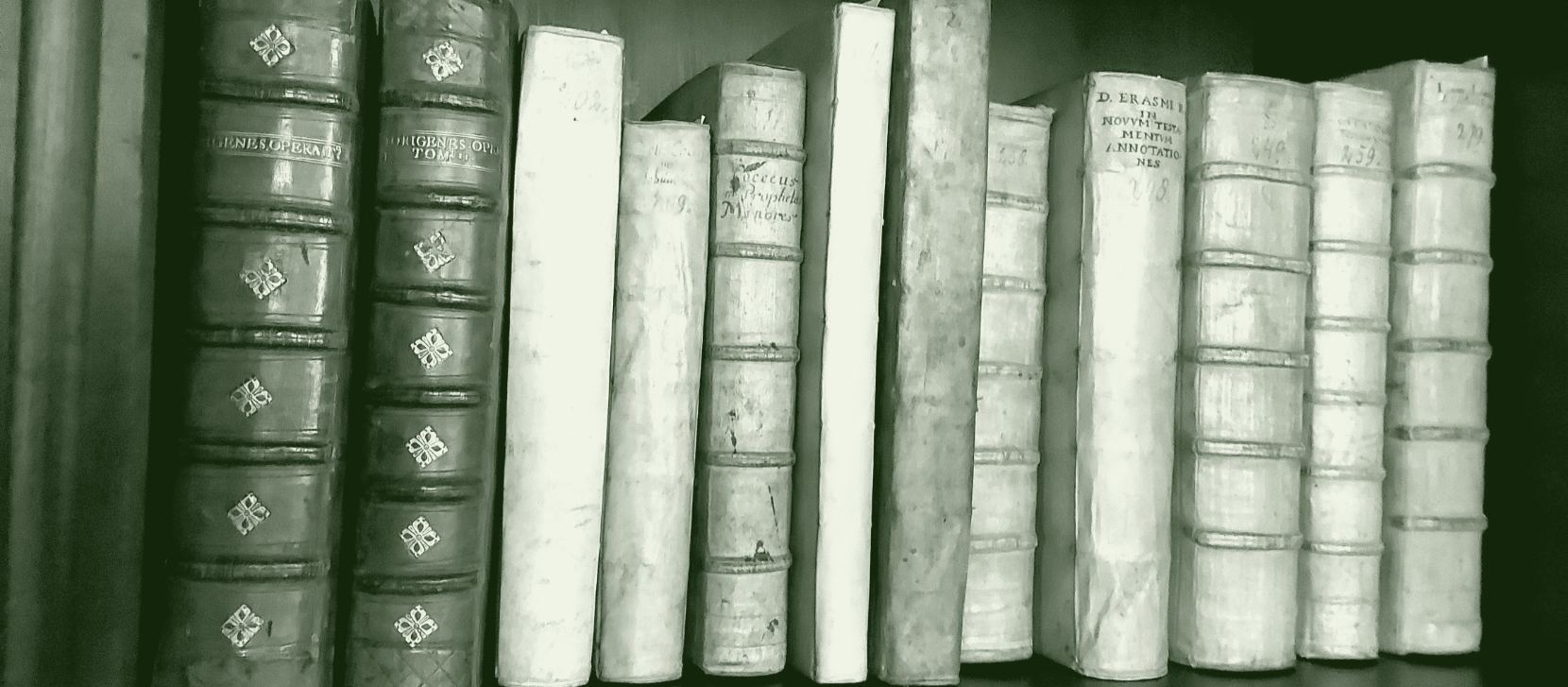
The vocabulary of this house
Seven words recur across this site. Here they are defined once, so that they do not come to mean something else elsewhere.
- Book
- A complete textbook, fifty pages at the very least, with its progression, its exercises and their worked answers. A shorter document is a worksheet, and it does not enter the catalogue.
- Dedicated project
- The people and the time assigned to one single book, from the first chapter to release. A project never works on two books at once.
- Crossed checking
- The full reading of a text by someone who did not write it. It is an obligation, for every language published, and it bears on substance before style.
- Colophon
- The making record printed in the book: who, when, with what, under which licence, and the caveat about mistakes. At the foot of every page on this site, the colophon says the same about the site itself.
- Leaf
- One page of the work. The foot of this site carries its rank and the total, both counted at build time: it is a book folio, applied to a website.
- CC BY 4.0
- The Creative Commons Attribution licence, version 4.0 international. It allows copying, translating, adapting and selling, on the condition that the author is credited. It is irrevocable.
- Editorial design
- The layout, the grid, the typography and the visual identity. It remains the property of ODERSA, all rights reserved, and it is the single exception to everything else being open here.
How a book enters the catalogue
Six gates, and each one can refuse. A book that fails at any of them does not appear.
- The decision
The association opens one title, and only one. A subject already covered by a complete, openly licensed work is not opened. - The writing
The course, the exercises and the answers, by one hand, all the way to the end of the contents. Fifty pages at the very least. - The illustrations
Every image is openly licensed, its licence checked at its source page, and the image itself is looked at before it is adopted. - The crossed check
A full reading by somebody else, in every language. The reader works the exercises again. - The colophon
Who, when, with what, under which licence, plus the caveat about mistakes and the address for reporting them. - The deposit
One content file enters the repository, and the catalogue, the counters, the plan and the open data all rebuild themselves. Nobody copies a number by hand.
A filter axis only appears if it has something to separate: a shelf that holds a single book does not make a filter. The panel therefore rebuilds itself as the catalogue grows, and it never offers a sort that would sort nothing.